.svg)
Protecting People, Power, and Productivity
Electrical power systems are essential to modern operations, but they also carry significant risks. Arc flash incidents can result in severe injuries or death, equipment damage, and costly downtime. For Alberta based businesses, implementing arc flash safety protocols shouldn’t be seen as just regulatory compliance but as a strategic investment in workforce protection and operational resilience.
What Is an Arc Flash?
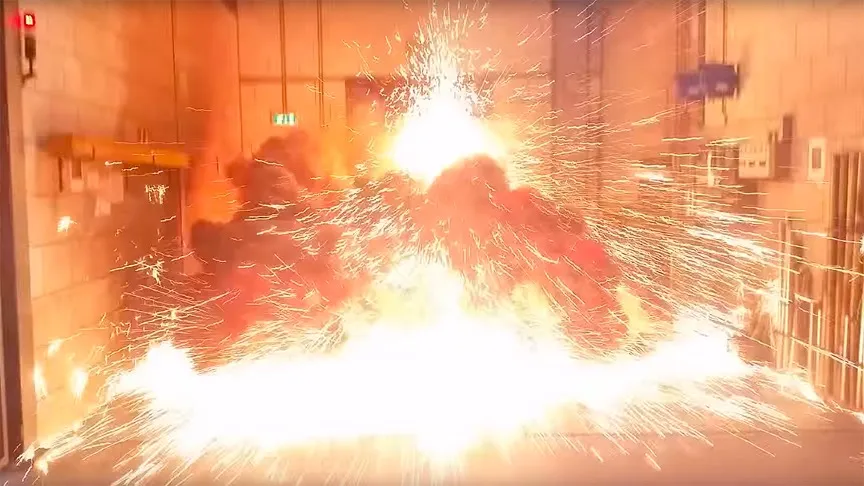
An arc flash is a sudden release of electrical energy in the form of light, heat and pressure caused by a fault in an electrical system. Temperatures can reach nearly 20,000°C (several times hotter than the surface of the sun), vaporizing metal and causing serious injuries such as burns, blindness, or even death. The severity and likelihood of these events can be mitigated with proper planning and safety measures.
Why Invest in Arc Flash Safety?
Enhanced Worker Safety: Protect employees from life-threatening injuries or death.
Regulatory Compliance: Avoid fines and legal consequences.
Operational Continuity: Minimize downtime and equipment damage.
Legal Risk Mitigation: Reduce liability under federal and provincial laws.
Reputation Management: Demonstrate a commitment to safety and industry best practices
Regulatory Requirements in Alberta
Alberta Occupational Health and Safety (OHS) Code:
Requires employers to protect workers from electrical hazards and provide flame-resistant clothing and PPE.
Canadian Electrical Code (CEC), Part I:
Mandates field-marking of equipment to warn of arc flash hazards.
CSA Z462 – Workplace Electrical Safety:
Offers detailed guidance on hazard assessments, labeling, and PPE selection.
Technical Bulletin TB 037 – Alberta Infrastructure:
Recommends arc flash studies for systems over 750 volts or with draw-out equipment.
Criminal Code of Canada – Bill C-45:
Holds employers legally accountable for workplace safety.
How to protect your personnel and facility from Arc Flash Hazards
1. Identify and Assess Arc Flash Risks
An effective arc flash risk mitigation strategy begins with methodical planning and detailed studies before even approaching energized equipment.
- Conduct Arc flash studies, following IEEE, NPFA and CSA methodology, for systems above 240V, especially those over 750V.
- Maintain accurate single-line diagrams and system documentation.
- Make necessary changes to your electrical system’s protection settings and/or equipment to reduce unreasonable arc flash risk to an acceptable level.
- Label equipment with arc flash hazard warnings and PPE requirements.
- Update studies at minimum, every 5 years or anytime there are major system changes.
2. Ensure that your Personnel are Properly Trained
The training of your employees is your responsibility and part of your due diligence as an organization. As a minimum, train all personnel working near energized equipment on:
- Arc flash hazards and how they occur
- Safe work practices (e.g., lockout/tagout, verifying absence of voltage)
- Proper use of PPE
- Emergency response procedures
3. Create a Culture of Safety and Enforce Safe Work Practices
Your risk mitigation strategy is only effective if it is implemented and maintained.
- De-energize equipment whenever possible using lockout/tagout (LOTO)
- Follow written procedures and risk assessments
- Maintain required approach boundaries
- Never bypass safety steps to “get the job done faster”
- If energized work is required, make sure the justification is documented and approved.
- Encourage employees to speak up about hazards
4. Provide the Correct PPE and Tools
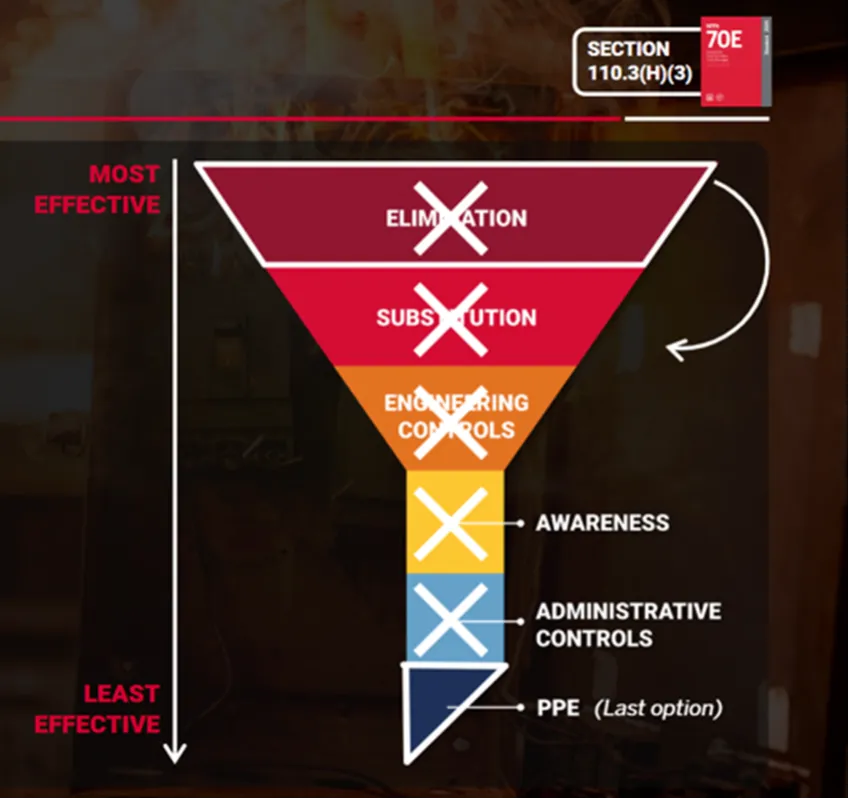
PPE itself does not eliminate arc flash risk but is an essential part of an effective risk mitigation strategy.
- Arc-rated clothing and PPE appropriate for the calculated incident energy
- Arc-rated blankets and tools that are insulated and rated for the task
- Ensure availability, regular inspection of PPE and tools, and replacement when damaged
5. Equipment Maintenance and Upgrade
A poor maintenance and documentation procedure increases the risk and likelihood of arc flash incidents.
- Ensure scheduled electrical maintenance is performed by qualified personnel
- Update electrical diagrams, documentation, arc flash studies, procedures and mitigation protocols when equipment changes
- Replace ageing or damaged equipment before failure
- Invest in engineering controls and advanced equipment (e.g., remote racking, arc-resistant switchgear)
Case Study: Arc Flash Hazard Analysis for a Large Mining Operation
The following is a case study on one of Potential Engineering’s recent arc flash projects.
Project Overview
A large mine operating an open-pit required an arc-flash hazard analysis to comply with current electrical safety standards and to support a broader reliability-improvement initiative. The site’s electrical system includes 69 kV, 13.8 kV, 7.2 kV, 4.16 kV and 0.48 kV distribution, with legacy switchgear, MCCs, and outdoor mobile substations feeding loads such as electric shovels, drills, large motors, etc.
Key Objectives
- Establish accurate arc-flash incident energy levels and boundaries for all energized work locations.
- Validate clearing times through updated short-circuit and protective device coordination modeling.
- Identify equipment with excessive incident energy (>40 cal/cm²) requiring engineering controls.
- Provide updated field-ready arc-flash labels and safe-work recommendations for maintenance personnel.
Methodology
- Data collection and System Modelling
- Load Flow and Short Circuit Analysis
- Protective Device Coordination
- Arc Flash calculations and recommendations
Key Findings
- High Incident Energy Locations: Several 480 V MCCs exceeded 40 cal/cm2 due to slow/incorrect legacy relay settings
- Incorrect Relay Settings: Some relays were found to have protection settings bypassed or set very high (setting creep over time due to nuisance tripping is very common and a significant arc flash risk factor)
- Unsafe Protective equipment sizes: one transformer and two switched disconnects were found to have significantly oversized fuses leading to high incident energy values
Solutions and Recommendations
- Engineering Controls: Implement new settings on several relays that decrease the incident energy on multiple feeders while allowing for proper protection and operation
- Field Deliverables: >1000 Arc-flash labels, updated ETAP Digital Twin model of their electrical system and training session with maintenance electricians on interpreting labels, boundaries, and PPE requirements.
Final Thoughts
Arc flash safety is more than regulatory compliance; it’s a proactive commitment to protecting your team and your operations. At Potential we are committed to enabling our clients to achieve safer and resilient operations by facilitating their investment in studies, training, equipment, procedures and an effective workplace culture.
For support with arc flash studies, contact info@potentialengineering.ca